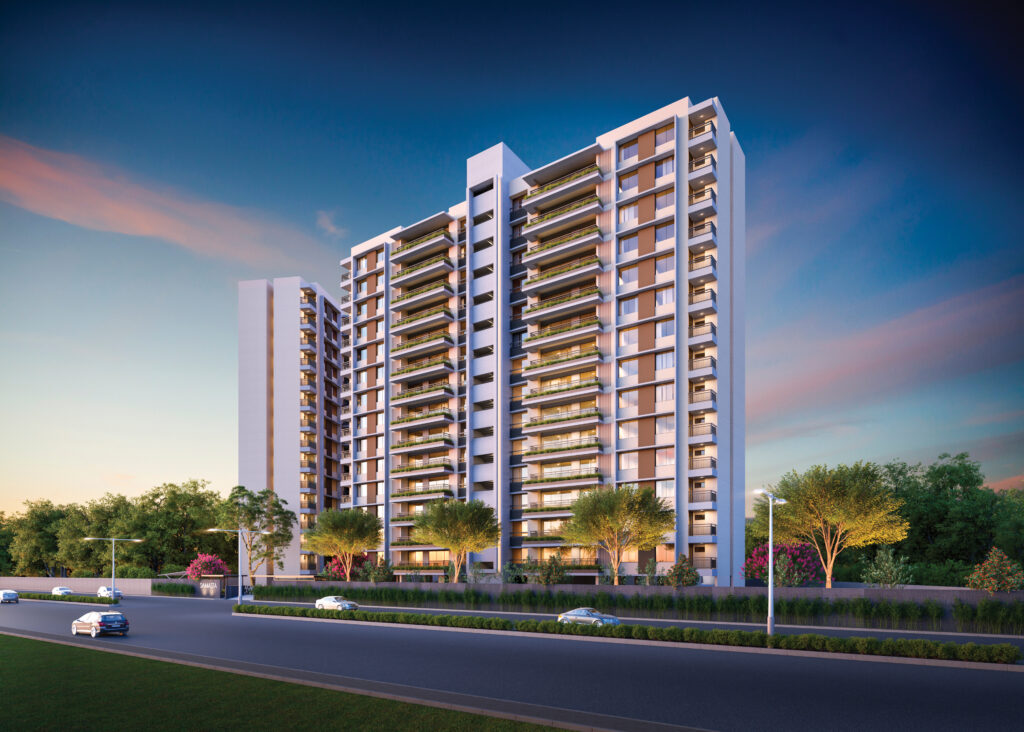
The Effect of GST on Real Estate and Looking at Buying New Flats.

With a GDP contribution of roughly 6-7%, the real estate industry is one of the foundational cornerstones of the Indian economy. For millions of individuals, it is a significant source of employment and income. However, the industry has been dealing with a number of issues, including high taxation, a lack of transparency, regulatory barriers, and a liquidity constraint. By streamlining the tax code, lowering taxes owed, and boosting compliance, the introduction of the Goods and Services Tax (GST) in 2017 was anticipated to help the industry.

Under the former system, several taxes on real estate transactions, including VAT, service tax, stamp duty, and registration fees, were combined into one indirect tax known as GST. Only properties that are still being built are subject to GST; however, homes that are finished or ready to sell are exempt from GST if they have received a completion certificate or have been occupied for the first time. The sale of undeveloped or developed plots is likewise exempt from the GST.

Since their establishment, the GST rates for real estate transactions have experienced numerous adjustments. Input tax credit (ITC) rates for affordable housing developments were initially set at 8% and 12%, respectively. ITC is a procedure that enables the builders to claim credit for the taxes paid on inputs like cement, steel, etc. Nevertheless, this system faced criticism for its complexity, susceptibility to leaks, and lack of utility to the final user.

The GST Council increased the rates and eliminated the ITC credit for housing projects in March 2019. The new rates for non-affordable housing projects are 5% without ITC while for affordable housing projects they are 1% without ITC. Affordable housing projects are those whose total cost to the builder does not exceed Rs. 45 lakh and whose carpet area is up to 60 square metres for metropolitan areas and up to 90 square metres for regional cities and towns. The old rates and the new rates are both available to builders for active projects starting on April 1, 2019.

GST has thus far had a mixed effect on the real estate market. On the one hand, the GST has improved tax structure uniformity and clarity while minimising the cascading effect of other levies. By putting more transactions within the formal system, it has also increased the sector’s accountability and transparency. However, the absence of the ITC and higher tax rates on key commodities, such cement, have increased the cost of building for builders as a result of the GST. As a result, builders now have reduced profit margins and purchasers now pay higher prices.

The effect of GST on buyers will vary depending on a number of variables, including the property’s location, kind, size, and degree of completion. The GST has no direct effect on purchasers of finished or ready-to-sell houses because they are exempt from it. However, depending on the state legislation, they can be required to pay greater stamp duty and registration fees. Depending on whether they are purchasing an affordable or unaffordable housing project and whether they are purchasing from a builder who has chosen the old or new rates, GST may have a beneficial or negative effect on buyers of residences that are still under construction.

The GST has benefited purchasers of affordable housing projects since it decreased the effective tax rate from 8% with ITC to 1% without ITC. For buyers, particularly those who qualify for subsidies under programmes like the Pradhan Mantri Awas Yojana (PMAY), this has increased the appeal and affordability of affordable housing. GST may be detrimental to purchasers of unaffordable housing projects since it raises the effective tax rate from 12% with ITC to 5% without ITC. For purchasers who do not receive any ITC benefits, this has raised the cost of purchasing a property.

Depending on whether builders are able to pass on the ITC benefit to purchasers who are buying from builders who have chosen the previous prices with ITC, GST may have a neutral or positive impact. GST might have a detrimental effect on purchasers who are purchasing from builders who have chosen the new rates without ITC because they must pay the additional cost of building without receiving any compensation.

Therefore, before purchasing a home, buyers should consider the GST implications and weigh their options. They should also confirm whether their builder has chosen the old or new rates and whether they are receiving any ITC benefits.

In India, there are several new flat options available in a variety of towns and areas. You can browse online resources like Magicbricks, 99acres, Housing.com, etc. to find thousands of homes posted by developers, dealers, and owners. Additionally, you can look through a variety of residential projects that are planned for or now being built in various cities and regions. You can narrow down your search depending on your criteria, such as price range, neighbourhood, size, amenities, etc., and compare several properties according to their specifications, costs, ratings, reviews, etc. Through the platforms, you can also get in touch with the sellers directly and bargain for the best price.

When purchasing a new flat in India, you need take into account a number of factors, including:

  • One of the key elements affecting a property’s worth and desirability is its location. You should pick a property that has strong infrastructure, security, and communal amenities and is close to your workplace, educational institutions, hospitals, markets, etc. You should also look into the area’s prospects for the future and see if any projects or developments are planned that might have an impact on the area’s worth or suitability as a place to live.
  • Budget: Your budget greatly affects your decision to purchase real estate. You need to know exactly how much you can afford to spend on a property purchase and how you plan to finance it. You should also take into account any additional expenses you might incur while purchasing a home, such as GST, stamp duty, registration fees, maintenance fees, etc. Additionally, you should examine the interest rates and terms and conditions offered by different banks and government programmes, as well as determine your eligibility for house loans and subsidies.
  • Size: The size of a property affects its comfort and function. You should pick a size that meets your demands and preferences without sacrificing your quality of life. Additionally, you should inspect and comprehend the differences between the property’s carpet area, built-up area, and super built-up area. The carpet area is the actual, useable portion of the house, excluding the walls, balconies, etc. The built-up area includes the carpet area in addition to the walls, balconies, etc. The super built-up area combines the built-up area with communal spaces like the lift lobby and stairwell.
  • Amenities: Amenities are yet another crucial element that raises a property’s value and appeal. Check the property’s amenities to see if they fit your expectations and needs. Parking space, power backup, water supply, security, a lift, a gym, a swimming pool, a clubhouse, a garden, etc. are a few of the common amenities that you could search for. Additionally, you should confirm whether these extras are part of the purchase price of the home or are subject to a separate maintenance fee.
  • Another crucial element that affects a property’s endurance and safety is its quality. You should examine the property’s building quality, materials used, fittings, fixtures, etc., to see if they meet the criteria and guidelines established by the authorities. Additionally, you should confirm that the property has received all required approvals and certificates from the relevant agencies, including the RERA (Real Estate Regulatory Authority), municipal corporation, fire department, etc.
  • Another crucial component that affects a property’s reputation and legitimacy is the builder. You should investigate the builder’s history, performance record, financial stability, client feedback, etc., to see if they have completed past projects on schedule and in accordance with their commitments. Additionally, you want to see if any authorities or clients have lodged any complaints or disagreements with them.

If you do your research and choose wisely depending on your needs and tastes, purchasing a new flat in India may be a rewarding experience. The cost and benefit of purchasing a property may be impacted by changes in the tax structure and rates brought about by the GST. Therefore, before purchasing a house, you should be knowledgeable of these changes and their effects.

I hope this blog post has been informative and insightful for you as you research buying new apartments in India and learn more about GST on real estate. Please feel free to leave a comment below or send me an email if you have any questions or suggestions. I appreciate your reading.


Do’s and Don’ts for Pet Parents: The Ultimate Guide on Keeping Pets in Apartments.

If you love animals and live in an apartment, you might be wondering how to care for them in a tiny area. Apartment pet living can be difficult, but it’s not impossible. You can make your home a cosy and secure place for you and your dogs with a little forethought, patience, and preparation. We’ll go over some dos and don’ts for pet owners who want to keep their animals in apartments in this blog.

Do: Review your apartment’s pet policy.

The pet policy of your apartment building should be reviewed before bringing a pet home. The kind, size, quantity, or breed of pets that are allowed may be limited in some flats. A pet deposit, fee, or rent could be needed in some cases. Understanding the terms and circumstances of having a pet should be understood by carefully reading the lease agreement. Additionally, before you adopt or purchase a pet, you should obtain written consent from your landlord or property management.

Avoid ignoring your neighbours.

You have to be courteous of your neighbours if you have a pet and live in an apartment. Ensure that your pet doesn’t disrupt the neighborhood’s residents or cause any property damage to the communal areas. Especially at night or in the early hours of the morning, you should teach your pet to be quiet and well-behaved. In order to prevent your pet from becoming bored, anxious, or destructive, you should avoid leaving them alone for extended periods of time. The waste from your pet should be properly disposed of and cleaned up after.

Make sure your pet fits your lifestyle by selecting it.

Apartment living is not appropriate for all pets. A pet that fits your tastes, personality, and way of life is what you should get. You should take into account things like the pet’s size, amount of energy, temperament, grooming requirements, and health concerns. Consider getting a tiny dog, cat, rabbit, hamster or fish if you live in a small flat, for instance. You might want to stay away from pets that demand a lot of care, exercise, or socialisation if you have a hectic schedule. You might want to search for hypoallergenic pets if you suffer from allergies.

Don’t: Ignore the demands of your pet.

Pet owners should not disregard their animals’ needs just because they live in an apartment. Toys, beds, food, water, shelter, and other necessities like a litter box should all be provided for your cat. Additionally, you should frequently take your pet to the vet for checkups, vaccinations, deworming, spaying/neutering, etc. Keeping your cat clean and parasite-free also requires frequent grooming. As well as providing your pet with enough love, affection, and stimulation, you should spend quality time with them.

Exercise and socialise your pet.

It might be difficult to provide a pet enough exercise and socialisation in a flat, which is one of the major obstacles. To keep your pet healthy and happy, you need make sure they engage in adequate mental and physical activity. At least twice a day, you should play with your dog indoors or outdoors and take them for walks. Additionally, you want to sign up your dog for obedience training or activities at dog parks where they may mingle with both people and other dogs. Toys or games that encourage your cat or other pets’ natural tendencies should be used when playing with them.

Do not violate any laws or norms.

It is required that you abide by any local ordinances or guidelines when keeping a pet in an apartment. Regarding animal management, permits, immunisation requirements, leash restrictions, etc., you must adhere by local ordinances. Regarding noise levels, waste disposal, and other issues, you should abide by the rules of your apartment building. Along with knowing the regulations and laws, you need also be aware of the penalties for breaking them, which may include fines, eviction, or legal action.

You should now have a better understanding of some of the dos and don’ts associated with flat pet ownership thanks to this blog. The advantages of owning a pet can be enjoyed without sacrificing your comfort or convenience if you keep in mind these suggestions. You’re welcome for reading!

Defending Against 8 Common Myths Regarding Loan Against Property.

A secured loan called a loan against property (LAP) enables you to borrow money by using your property as collateral. It might be a practical strategy to take care of your financial requirements, such paying for your child’s school, growing your business, or consolidating your debts. However, there are several widespread misconceptions and illusions regarding LAP that may prevent you from taking use of its advantages. We will dispel eight of these fallacies in this blog so you can make an educated choice

Myth 1: Only residential properties are eligible for an LAP.

Any sort of property, whether residential, commercial, industrial, or agricultural, is eligible for an LAP. However, depending on the kind and worth of the property, the eligibility requirements, loan sum, interest rate, and term could change. Compared to other types of properties, residential homes typically have higher loan-to-value (LTV) ratios and lower interest rates.

Myth 2: You must give the lender ownership of your property.

Factual statement: When you accept an LAP, you are not required to give the lender ownership of your property. To secure the loan, all you need to do is mortgage your property. This indicates that you are still in possession of your property and have the right to utilise it anyway you see fit. To avoid legal action and the sale of your property to recoup the debt, you must return the loan in accordance with the terms and circumstances set forth in the contract.

Myth 3: You are limited to using the loan proceeds for certain objectives.

You may utilise the borrowed amount for any morally and legally acceptable personal or professional purpose. LAP has no limitations on the final use of funds, unlike several other loan kinds, like mortgages and student loans. You can use it to pay for expenses like debt reduction, home improvement, wedding fees, travel, and a variety of other things.

Myth 4: LAP comes with a high interest rate.

Fact: A number of variables, like your credit score, income level, property value, LTV ratio, loan term, etc., affect the interest rate for LAP. LAP often offers interest rates that are competitive with other unsecured loan kinds, like credit cards and personal loans. This is so that the risk to the lender is lower because LAP is a secured loan. Additionally, you can bargain with the lender and take advantage of special offers or discounts based on your profile and qualifications.

Myth 5: There are numerous fees and costs associated with LAP.

Fact: Lenders have different fees and charges for LAP depending on the loan amount, loan term, kind of property, etc. Processing fees, appraisal fees, legal fees, stamp duty, foreclosure fees, and other regular fees and taxes are just a few. In contrast to other loan kinds, these fees and charges are typically small and cheap. Additionally, you can evaluate many lenders and select the one that provides the greatest deal with the fewest fees and penalties.

Myth 6: You have a limited amount of time to repay the loan.

Fact: Your loan size, interest rate, monthly payment, and other factors determine how long LAP will take to pay off. LAP typically provides more flexible repayment options and longer loan terms than other loan kinds. You can select a tenure based on your financial position and ability to make payments. Depending on the lender and the type of property, the maximum LAP tenure may be 15 years or longer. When picking the tenure, you should, however, also take into account the impact of interest costs and tax advantages.

Myth 7: It is impossible to prepay or foreclose on an LAP

Factual statement: There are no fees or penalties associated with prepaying or foreclosing your LAP at any point throughout the loan’s term. You can lessen your debt load and save money on interest fees by doing this. However, before you may prepay or foreclose your LAP, certain lenders may require a lock-in term or a certain amount of installments. Before submitting an application for a loan, you should inquire with your lender about their prepayment or foreclosure policies.

Myth 8: Having an LAP prevents you from taking out any new loans.

Factual statement: If you have enough income and the ability to repay the loan, you can obtain another loan while having an LAP. While taking out various loans, you should be mindful of your debt-to-income ratio and credit score. Too many loans might damage your credit and make you feel more stressed about money. As a result, you should only take out another loan if you absolutely need it and if you can afford it.

We hope that this blog post has dispelled some common misconceptions about LAP and inspired you to think about it as a potential solution for your financial requirements.

Are You Missing Out on These Benefits of Living in a High-Rise Apartment?

Benefits of Living in a High-Rise Apartment :-

A View :
The view is one of the key advantages of renting a high-rise apartment. If the flat is situated in a wealthy neighbourhood, you may take in the beautiful scenery of the city. The view improves with apartment height. In comparison to the lower floors, you also get more natural light.

Peaceful :

You are also farther away from city noise and pollution if you live in a high-rise apartment. In your little haven, away from the bustle of the busy streets, you may unwind and relax. Better ventilation and fewer insects are additional benefits.

Security :

Due to the presence of security cameras, motion sensors, fire prevention and safety systems, and accessible exits, high-rise apartments are more secure than low-rise ones. As you are higher up in the structure, you are also less likely to experience a burglary or an intrusion by a stranger.

Get to know your neighbours :

Due to the numerous buildings that host events and gatherings for inhabitants, high-rise living can also provide fantastic opportunity for socialising. You can socialise with your neighbours, make new friends, and take advantage of the sense of community that high-rise living offers.

Utility Billing :

Due to economies of scale, high-rise apartments typically have cheaper utility bills than low-rise ones. Because there are so many units in the building, the constructor can bargain for lower prices, and the inhabitants benefit from these savings. Additionally, some buildings have free Wi-Fi in their lobby areas, which can enable you to reduce your internet costs.

Luxury :

Due to their greater size and amenities, high-rise apartments are frequently more opulent than low-rise ones. Fitness centres, swimming pools, round-the-clock security, and other amenities can be found in some high-rise apartments, which enhance their comfort and convenience. Penthouses with breathtaking views and private access are also available in some high-rise buildings.

Location :

In the best parts of the city, high-rise apartments are typically adjacent to commercial districts, leisure destinations, shopping malls, and public transportation. As a result, you can commute more efficiently and affordably while still benefiting from the accessibility and convenience of urban life.

Community :

Living in a high-rise apartment can also enable you to foster a sense of neighbourhood among your neighbours. You can take part in the celebrations, parties, workshops and clubs that the management of the building hosts. Additionally, you can broaden your social circle by networking with people from various vocations and backgrounds.

How to Buy Your First Home: A Complete Guide for Beginners ?

Steps to Buying a Home :-


Start putting money aside as soon as possible: A lot of money is needed to purchase a home, not just for the down payment and closing charges but also for moving costs, furniture, repairs, and maintenance. You should begin saving as soon as you can, ideally 10% to 20% of the home’s cost or more for the down payment1. You can also search for initiatives that help eligible first-time buyers with their closing costs or with their down payment.


Determine the size of the home you can afford: You should be fully aware of how much you can afford to spend each month on your mortgage payment, property taxes, homeowners insurance, and other costs before you begin looking for a home. As a general rule, you should not spend more than 28% of your total monthly salary on housing. You may use internet calculators to determine how much house you can buy based on your income, debt, and savings.

Examine and improve your credit score: because it has a big impact on whether you can receive a mortgage with a cheap interest rate. At least once a year, you should review your credit reports from the three major bureaus (Equifax, Experian, and TransUnion) and challenge any errors or inaccuracies. Prior to submitting an application for a mortgage, you should also pay all of your payments on time, keep the balance on your credit cards low, and refrain from applying for any new credit.

Investigate your mortgage options: For first-time home purchasers, a variety of mortgages are available, including conventional loans, FHA loans, VA loans, USDA loans, and others. Every one has its own specifications, advantages, and disadvantages. Find a mortgage option that best fits your needs and objectives by comparing several mortgage products. Along with these factors, think about how long you intend to stay in the house and whether you want a fixed-rate or adjustable-rate mortgage.

Find out about initiatives to help first-time homebuyers: You might be qualified for a number of programmes as a first-time home buyer that can assist you with your purchase. These include tax breaks, grants, loans, and discounts provided by the federal government, state governments, or nonprofit organisations. Find out if you are eligible for any of the programmes that are offered in your neighbourhood. The Pradhan Mantri Awas Yojana (PMAY) in India, the First-Time Home Buyer Incentive (FTHBI) in Canada, and the First-Time Home Buyer Tax Credit (FTHBTC) in the United States are a few of the most well-known initiatives.

After deciding on a mortgage choice and a lender, you should shop around and evaluate the interest rates and costs provided by other lenders. Your monthly payments and the overall cost of the loan over its life can be significantly affected by a modest variation in the rate or fee. Each lender should provide you with a loan estimate, which is a written summary of the specific terms and costs of the loan.

Collect your loan papers. You will need to present several documents to confirm your identification, income, assets, and debts in order to apply for a mortgage. These could be things like pay stubs, bank statements, tax returns, W-2 forms, credit reports, driver’s licences, passports, etc. These papers should be gathered in advance, and copies should be made for your lender. Before applying, you should double-check your credit score and address any inaccuracies or problems.

Obtain a preapproval letter: A preapproval letter from a lender outlines the amount they are willing to loan you in light of your financial status. By demonstrating to sellers your seriousness and readiness to purchase, becoming preapproved can provide you an advantage over other buyers who are not preapproved. By providing you with a reasonable price range, a preapproval letter can also aid in the narrowing down of your house search.

Find a real estate agent: A real estate agent is a specialist who can assist you in locating houses that meet your criteria, negotiating with sellers, handling the paperwork, and guiding you through the entire process. For first-time home buyers who might not be familiar with the market or the legal issues of buying a home, finding a reputable agent is essential. You should seek out a real estate agent that has knowledge of working with first-time buyers, is knowledgeable about the neighbourhood, is good at communicating, and has your best interests at heart.

Make a wishlist for your future house before you start looking at properties, either in person or online. This will enable you to focus on the solutions that best suit your criteria and help you reduce your list of choices. The home’s location, size, style, features, amenities, condition, and pricing are a few of the important considerations. As you might not discover a home with everything you desire, you should also prioritise your wishlist and be flexible about some of the goods.

Find houses: Once you have a preapproval letter and a list of things you want in a home, you can begin looking for houses that meet your needs and preferences. Use internet resources like Redfin or Realtor.com to explore listings, view photographs, compare prices, and sign up for new listings alerts. To view the homes in person, you may also go to open houses or arrange for private showings with your realtor. When you visit a house, you should pay attention to the small aspects, make notes, ask inquiries, and contrast it with other houses you have visited.

Make a counter offer to the seller: if you locate a house you love and can afford. An offer is a formal proposal that details the terms and amount of your bid to buy the house. Based on the market conditions and the valuation of the property, your agent can assist you in creating a competitive and reasonable offer. The price, the earnest money deposit, the conditions, the closing date, and any additional terms or demands should all be included in your offer.

Negotiate with the seller: After you make an offer, the seller has the option of accepting it, rejecting it, or making a counteroffer. A counteroffer is a reply from the seller that includes alterations to the conditions of your initial offer. You have three options: accept the counteroffer, reject it, or submit another counteroffer. Up until the final conditions are agreed upon by all sides, this procedure may back and forth. Your agent can assist you in negotiating with the seller and give you guidance on how to approach various situations.

Get a home inspection: A home inspection is a comprehensive examination of the physical state and construction of the home by a licenced specialist. A home inspection can identify any flaws or difficulties, such as poor wiring, plumbing problems, roof leaks, mould, termites, etc., that might compromise the value or safety of the house. Before the closing date and usually following your offer’s acceptance, a house inspection is conducted. It is often a contingency in your offer, so if the inspection turns up serious problems, you can back out or demand repairs.

Complete your purchase: The last phase in the home-buying process is closing, at which you sign all the required paperwork, make final payment for all fees and costs, and receive the keys to your new residence. In order to complete the deal, the parties normally gather in a title firm or an attorney’s office during closing. Bring your identification, your chequebook, and any other documentation your lender or agent may need. Before closing, you should conduct one more walkthrough of the house to make sure everything is as expected and in order.

Advice for First-Time Home Buyers

Do your study: Purchasing a home is a significant decision that requires extensive planning and research. You should familiarise yourself with the fundamentals of home buying, including how mortgages operate, the different types of loans that are available, the associated costs and fees, your rights and obligations as a buyer, etc. Before making a decision on a home, you should also do some local market research on market trends, neighbourhood characteristics, school rankings, crime statistics, etc.

Don’t go over your budget: Purchasing a larger property than one can afford is one of the most frequent errors made by first-time homebuyers. Financial stress and trouble making your monthly payments may result from this. Stick to your spending plan and refrain from splurging on a home that might not meet your requirements or way of life. When creating your budget, remember to account for additional costs associated with house ownership, such as upkeep, repairs, utilities, taxes, insurance, etc.

Being too rigid or idealistic about their dream home is another typical mistake made by first-time homebuyers. While it’s crucial to know exactly what you want and need in a home, you need also be adaptable and willing to give up some of the goods on your wishlist. It’s possible that you won’t locate a house that precisely embodies your ideal lifestyle or has all the features you desire. Find a house that satisfies your top priorities and has room for improvement.

Obtain qualified assistance: For anyone, purchasing a home can be intimidating and challenging, but first-time buyers may lack the necessary knowledge or expertise. Therefore, seeking professional assistance is recommended.

How Can Technology Make Your Home Into A Smart And Modern Living Space?

Smart homes are those that employ technology to automate, regulate, and improve a variety of areas of daily life, including lighting, security, entertainment, comfort, and energy economy. Modern living is a way of life that embraces the advantages of smart home technology and adjusts to the users’ shifting requirements and preferences. Here are few examples to illustrate how modern living and smart houses are integrated:

  • Smart home appliances have internet access, allowing them to communicate with one another, the user, and other services. Smart speakers, for instance, may play music, respond to queries, manage other devices, and set reminders.
  • The major components of the smart home network, or hubs, are managed and coordinated by them. They might be standalone gadgets like the Amazon Echo or Google Home, or they can be built into PCs, smartphones, and tablets.
  • Software programmes known as “smart home apps” enable users to access and manage their connected devices from anywhere. Based on the user’s behaviour and choices, they can also offer comments, suggestions, and alarms.
  • Smart home sensors are tools that identify and quantify a range of physical phenomena, including motion, temperature, humidity, light, sound, smoke, etc. They have the ability to initiate processes or transmit information to different hardware or services.
  • Actuators in smart homes are gadgets that carry out tasks physically in response to commands or signals from other gadgets or services. They could be smart appliances, smart appliances, smart lights, smart locks, smart thermostats, etc.
  • Smart home scenes are programmed settings or routines that, in response to specific circumstances or occurrences, turn on a variety of smart home gadgets. A “good morning” scene might play the news, brew coffee, turn on the lights, and adjust the thermostat.
  • Smart home voice control is a feature that enables users to communicate with their smart home appliances using natural language commands or inquiries. Smart speakers, cellphones, and other tech tools with microphones and speakers can be used for it.
  • A smart home security system guards against burglars, fire, flood, and other dangers. It may consist of smart alarms, smart smoke detectors, smart cameras, smart doorbells, etc. In the event of an incident, it can also alert the user or call for help.
  • A method for managing the energy use and production of smart homes. Smart batteries, smart solar panels, smart switches, smart plugs, and smart metres are a few examples. It can also offer advice on how to save money and energy.
  • A system for smart homes can make it more enjoyable and convenient to watch TV, listen to music, play video games, or read books. Smart projectors, smart speakers, smart soundbars, smart TVs, smart remote controls, etc. can all be part of it. According on the user’s choices, it can also offer tailored recommendations and material.
  • A method for improving the physical and mental health of the residents of a smart home is called smart home health and wellness. It can consist of smart scales, smart fitness trackers, smart blood pressure monitors, smart air purifiers, smart sleep sensors, etc. Based on the user’s health information, it can also offer tailored recommendations and criticism.
  • Smart home personalization is a feature that enables the user to alter their smart home’s services and products to suit their preferences and requirements. It may involve creating user profiles, developing voice or facial recognition, modifying device settings, selecting preferred content or services, etc.
  • The process of connecting and coordinating smart home services and products with other platforms or ecosystems is known as smart home integration. It may involve using voice assistants like Alexa or Google Assistant to control multiple appliances or services, smart home apps like IFTTT or Samsung SmartThings to design automation rules or scenarios, or cloud services like Google Drive or Dropbox to store and access data from various devices.
  • The problems or difficulties a user could encounter when utilising smart home technologies are referred to as smart home challenges. Security risks, such as hacking, phishing, or spying; privacy concerns, such as data collection, sharing, or misuse; reliability issues, such as device malfunction, network outage, or power outage; compatibility problems, such as device or service incompatibility, interoperability, or standardisation; or ethical conundrums, such as user consent, responsibility, or trust, can all be included.

Now that you are aware of the advantages of a smart house, think about purchasing a luxury flat from Samasta Spacelinks. Here, you can easily include smart home technologies to design a contemporary and practical living area.

How Gujarat leads the way in smart city development in India?

Gujarat’s Urban Development is Moving Forward


Gujarat is one of India’s states with one of the highest rates of urbanisation and industrialization. To improve the standard of living, infrastructure, and environment in its metropolitan regions, the state government has been putting numerous plans and programmes into action. The Smart Cities Mission, one of the main efforts, intends to deliver fundamental infrastructure and intelligent solutions to six chosen cities: Surat, Ahmedabad, Vadodara, Rajkot, Gandhinagar, and Dahod.

Leading the Way with Smart Cities in Gujarat

The Smart Cities Mission has been implemented in Gujarat’s six smart cities, which have been working on a variety of projects and initiatives involving e-governance, energy management, waste management, urban transportation, water management, and ICT. Some of their accomplishments’ high points include:

  • 92% of Surat’s projects, totaling Rs 3,057 crore, have been finished. Some of the significant projects include the development of heritage and tourism sites, the installation of smart metres and solar rooftops, the construction of skywalks, flyovers, bridges, and BRTS corridors, and the use of intelligent traffic management systems.
  • 74% of Ahmedabad’s initiatives, totaling Rs 2,000 crore, have been completed. The development of the Sabarmati Riverfront, the installation of CCTV cameras and public address systems, the use of smart health cards and smart classrooms are a few of the significant projects. Other noteworthy ones include the beautification and lighting of bridges including the Sardar Bridge, Ellis Bridge, and Nehru Bridge.
  • With a total project value of Rs 1,600 crore, 82% of Vadodara’s projects are now complete. Among the significant projects are the renovation of Sursagar Lake and the Kala Ghoda River Bridge, the installation of LED streetlights and Wi-Fi hotspots, the creation of parks and gardens, and the deployment of an automated system for preventing land encroachment.
  • With a total estimated cost of Rs 2,162 crore, 44% of Rajkot’s projects have been finished. Aji Riverfront Development, Smart Pole and Smart Bin Installation, Development of Cycling Tracks and Footpaths, and Smart Water Management System Implementation are a few of the significant projects.
  • Half of Gandhinagar’s initiatives, totaling Rs 1,007 crore, have been finished. Among the major projects are the construction of the Mahatma Mandir Convention Centre, the setting up of solar power and rainwater collection systems, the creation of a sports complex and cultural centre, and the implementation of a smart parking system.
  • 67% of Dahod’s projects, totaling Rs 647 crore, have been completed. Developing the lakefront area, creating a history walk, building a sewage treatment facility, building a bus terminal, building a train station and implementing a smart education system are only a few of the noteworthy initiatives.

By utilising technology, creativity, and public involvement, Gujarat’s smart cities have been setting the pace for urban development. While also boosting their economic competitiveness and social inclusivity, they have been fostering sustainable and habitable ecosystems for their citizens.

How Vadodara’s Real Estate is Changing the Face of Gujarat ?

One of the biggest and most advanced cities in Gujarat is Vadodara, sometimes referred to as Baroda. In addition, it is a centre for culture and education, home to a number of renowned institutions and significant landmarks. By providing a range of options for consumers and investors, Vadodara’s real estate market is altering how Gujarat is perceived. Several elements contribute to the allure and vibrancy of Vadodara’s real estate, including the following:

Instance and connectivity

Between Ahmedabad and Surat, two of Gujarat’s most significant towns, Vadodara is situated strategically on the banks of the Vishwamitri river.

Road, train, and air travel are all very well connected to Vadodara. It has connections to important national thoroughfares like NH-8, NH-48, and NH-64. It also has a railway junction that links it to other cities like Mumbai, Delhi, and Ahmedabad. The Vadodara airport provides local and international service to a number of locations.

A number of industrial centres, including Halol, Savli, Makarpura, and Manjusar, are located nearby Vadodara and offer job possibilities and increase housing demand.

Development and Infrastructure

Water supply, sewage disposal, electricity, roads, bridges, parks, and other good public amenities are all present in Vadodara’s well-developed infrastructure.

Numerous construction initiatives, including the Vadodara Metro Rail Project, the Vadodara Smart City Project, the Vadodara Bus Rapid Transit System (BRTS), the Vadodara Urban Development Authority (VUDA) Master Plan 2021, etc. have taken place in Vadodara in recent years.

Additionally, Vadodara has experienced an increase in the number of commercial and retail establishments, including malls, multiplexes, hotels, hospitals, schools, and colleges, all of which improve the quality of life and draw in more customers.

Options and costs for real estate

Apartments, villas, bungalows, plots, row homes, penthouses, and other types of real estate are available in Vadodara for buyers and investors.

From affordable to luxurious properties, Vadodara has something to suit every taste and budget. In comparison to many other cities in Gujarat and India, Vadodara’s average property price per square foot is $3,500.

Due to the high demand and low supply, Vadodara’s real estate prices have likewise steadily increased over time. Vadodara is a desirable location for investment due to the city’s 10%2 annual increase rate of property prices.

Lifestyle and Culture

The architecture, art, music, festivals, food, and other aspects of Vadodara’s culture and legacy are well-known.

The Laxmi Vilas Palace, the Maharaja Sayajirao University of Baroda (MSU), the Baroda Museum and Picture Gallery, the EME Temple, the Kirti Mandir, etc. are only a few of the historical and cultural sites in Vadodara.

Aside from its numerous recreational and entertainment choices for locals and guests, Vadodara is renowned for its vivacious and multicultural lifestyle. Vadodara offers a variety of places for people to unwind, including parks, gardens, clubs, pubs, restaurants, cafes, theatres, etc.

Why Should You Invest in Vadodara Real Estate?

With a thriving culture, a deep past, and a bright future, Vadodara is one of Gujarat’s cities that is expanding the fastest. You should purchase real estate in Vadodara for the following causes:

Vadodara has a sizable population of approximately 2.2 million people, however there is a high demand for residential houses despite the poor availability. Investors seeking large returns can cover the resulting market gap created by this. Only 3,694 of the roughly 6,700 houses in Vadodara that are for sale are brand-new projects, according to MagicBricks. Because of this, there is a lot of room for new construction and for appreciating already-existing homes.

Cost-effective rates and alluring amenities:

Vadodara offers more cheap property prices than other Gujarati cities like Ahmedabad and Surat. In Surat, it costs $4,000, while the average price per square foot in Ahmedabad is $4,500. Vadodara is in the middle, at $3,000 per square foot. Furthermore, Vadodara has a wealth of advantages that make it an attractive place to live, including a decent infrastructure, educational institutions, healthcare facilities, recreation areas, and cultural attractions.

Vadodara is conveniently positioned in the middle of Gujarat, making it easy to visit from other significant cities throughout the state and the nation. It also has good connections. The Vadodara International Airport, the third busiest airport in Gujarat, provides excellent road, rail, and air connectivity. Additionally, Vadodara lies on the Delhi-Mumbai Industrial Corridor (DMIC), a significant infrastructure initiative designed to spur regional economic development.

Emerging industries and job openings:

Vadodara is a centre for many industries, including engineering, petrochemicals, pharmaceuticals, IT, and tourism. L&T, ONGC, GAIL, Reliance Industries, Alembic Pharmaceuticals, TCS, and Wipro are just a few of the reputable businesses that call it home. While luring highly qualified individuals from other regions of the country, these businesses also offer plenty of employment prospects for Vadodara residents. Along with its thriving startup and SME communities, Vadodara is renowned for its innovative spirit and entrepreneurial drive.